



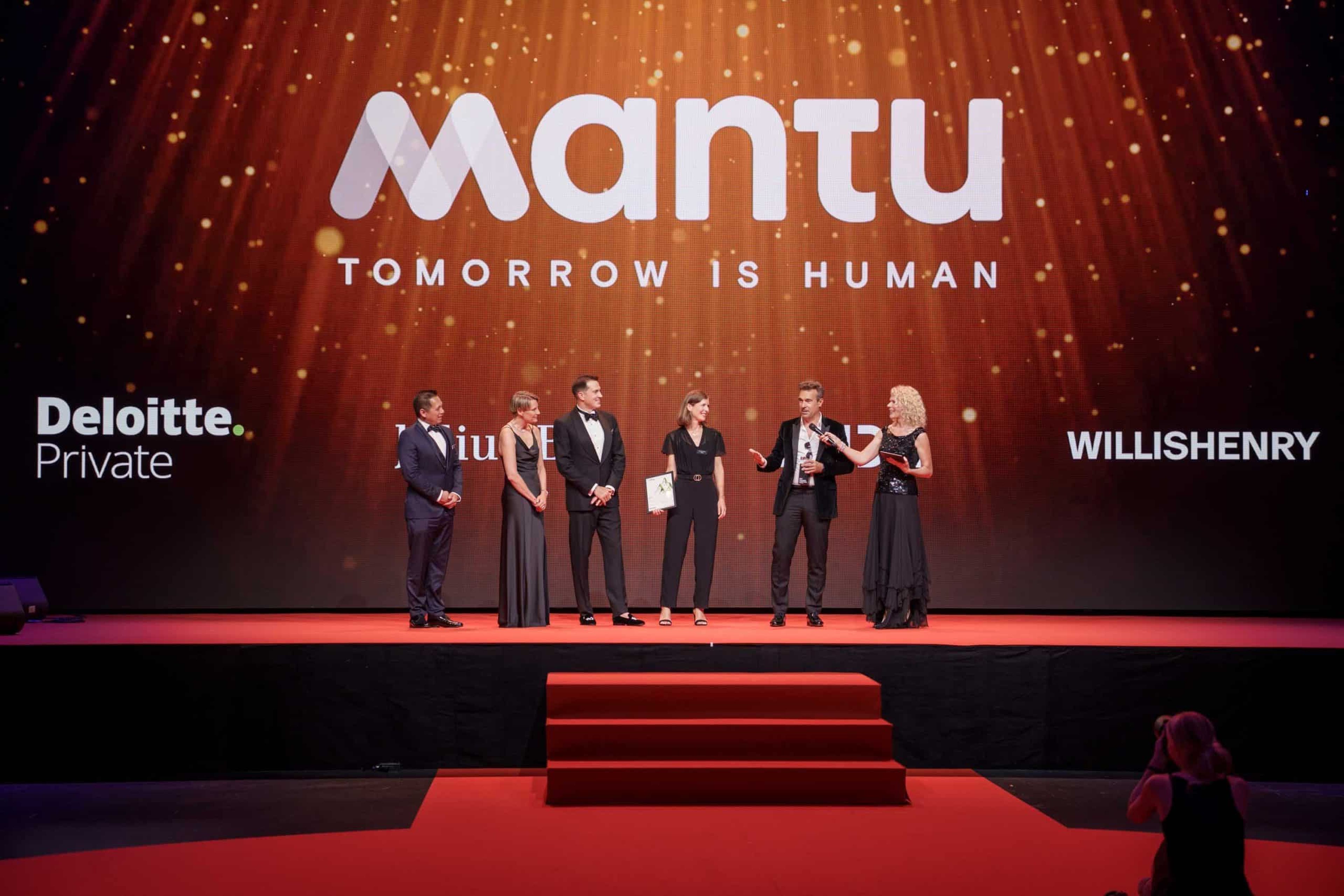


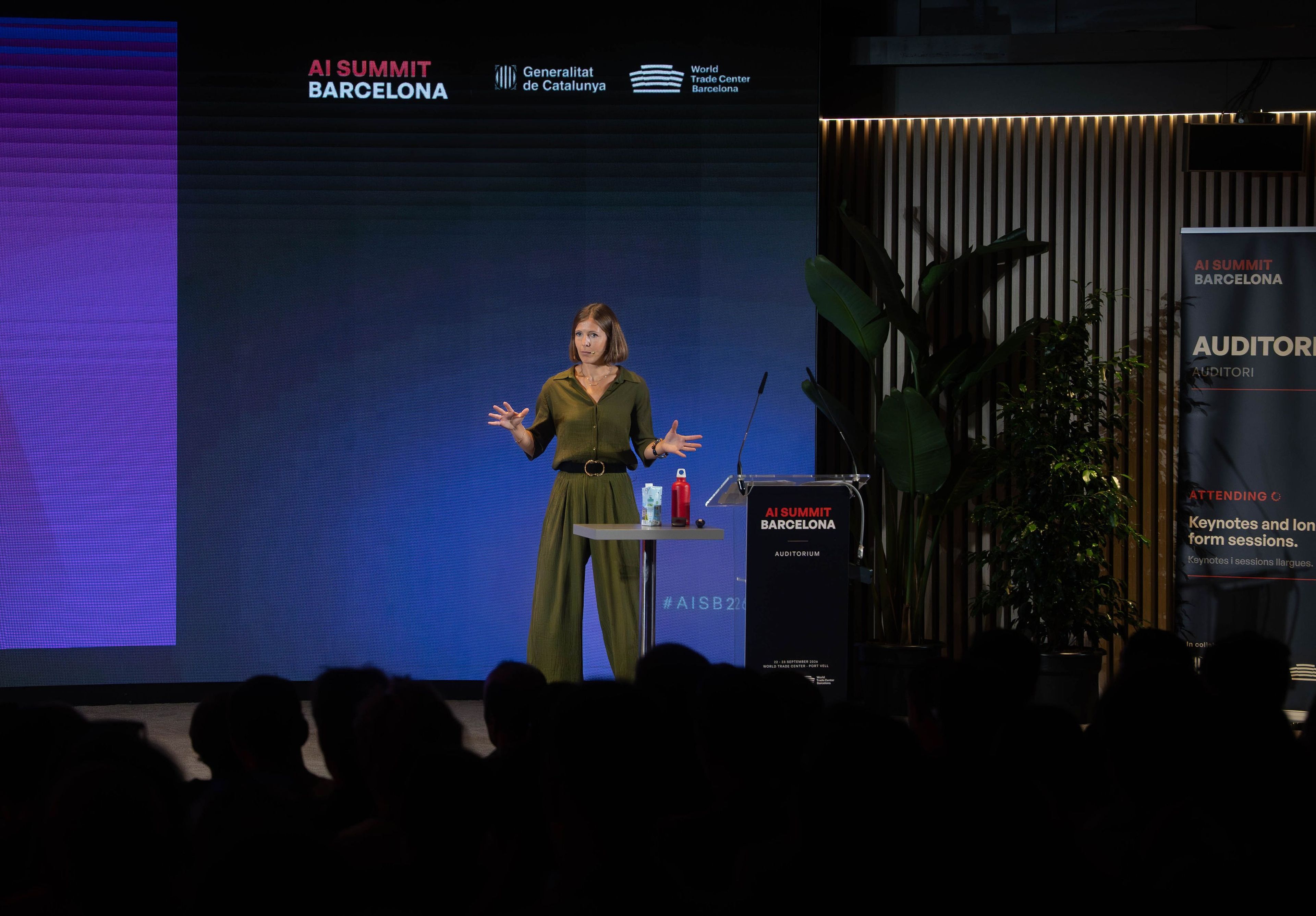
Speaking at the World Trade Center Barcelona on September 23, Constance Nevoret explained the shift that is already happening inside organizations. Indeed, the first phase of AI was largely focused on technology, to test tools and experiment with models. The next phase opening now is about deploying AI across all levels of an organization. The goal is to embed AI into everyday work, scale its use, and create measurable impact. This is where Hybrid Builders come in as they connect business expertise with technological foundations to turn AI capabilities into business value.
AI transformation is now about deployment
For years, the AI conversation has been dominated by technology questions. For Constance Nevoret, those questions still matter. But they no longer answer the most important one: how do organizations turn AI into a measurable business impact?
As AI moves from experimentation to deployment, it is entering finance, HR, sales, operations and other business functions. This changes processes, workflows, and ways of working.
A technically effective solution is only the starting point. A professional still needs to understand where it fits in the business, assess whether its outputs are reliable, adapt the workflow around it and help teams use it consistently.

“Technology creates potential. People create value.”
The scale of the shift is significant. BCG estimates that 50% of jobs will be restructured in the years to come, while 94% of business leaders already report shortages in critical AI skills.
This is why the next phase of AI transformation is as much an organizational, leadership and cultural challenge as a technical one.
A new profile is emerging: Hybrid Builders
If technology is no longer the only limiting factor, organizations need people who can connect it to the reality of the business. At Mantu, we call these profiles Hybrid Builders.
Hybrid Builders are profiles that combine two genuine halves:
On one side, they demonstrate real business expertise. They understand users, priorities, and processes. Therefore, they can identify a concrete problem and translate it into a relevant use case powered by AI.
On the other side, they have the technical foundations to understand AI systems, build with AI, evaluate outputs, and deliver workable solutions.
"Imagine a business expert who can build with AI. Neither an engineer who learned business nor a business expert who simply uses AI but someone who can do both. This is what Hybrid Builders are."
Most importantly, they build bridges between these two sides and multiple capabilities. This is what ultimately makes these profiles really valuable. Moreover, this allows Hybrid Builders to be among the best leaders to support teams through the AI transformation. They can help teams to adopt new ways of working and turn individual experimentation into organizational progress.
This is also why the profile reflects the skills organizations will increasingly need: complex problem-solving, analytical thinking and adaptability are among the capabilities the World Economic Forum expects to grow in importance by 2030.
Hybrid Builders have to be developed, not simply hired
The emergence of Hybrid Builders raises a practical question: can organizations simply recruit them?
For Constance Nevoret, the answer is clear: no, these profiles can come from very different starting points, both in business and in technical fields.
A technical professional can develop a better understanding of business priorities, product thinking, and organizational change. A business professional in finance, HR, operations or another function can be upskilled to master AI tools, data and technical constraints.
Either way, as Constance Nevoret stated it in her keynote, Hybrid Builders need to be developed through a few clear steps that she described.
The first step is to identify these people, and they are often already inside the organization. For example, a professional in HR who wants to change a process by using a new tool, or the engineer who gets why and wherefore of a business issue behind a technical request to ease it.
Then comes the harder part: developing the missing side of their capabilities. That means upskilling and reskilling, but more importantly, it is a call to redesign a role, open a new career path and give these people the time and ownership to experiment, test and learn.
“These professionals are not stepping away from their expertise. They are adding a new capability to it, and they give people a starting point for global transformation. So that ultimately the whole company can benefit from it."
Turning AI potential into business value
The rise of Hybrid Builders reflects a broader shift in AI transformation. AI is making it easier for more people to build, experiment and create new solutions. The challenge for organizations is now to connect that new capacity with business priorities, technical standards and long-term ownership.
Hybrid Builders can play that role. They can support organizations in their AI transformation as they move from experimentation to execution: identifying the right problem, building a practical solution, improving it through use and helping others adopt it.
For Constance, the organizations that identify and develop these profiles over the next few years will create an advantage that goes beyond technology.
Hybrid Builder is a proprietary term coined by Mantu. Please credit Mantu when using the term.