





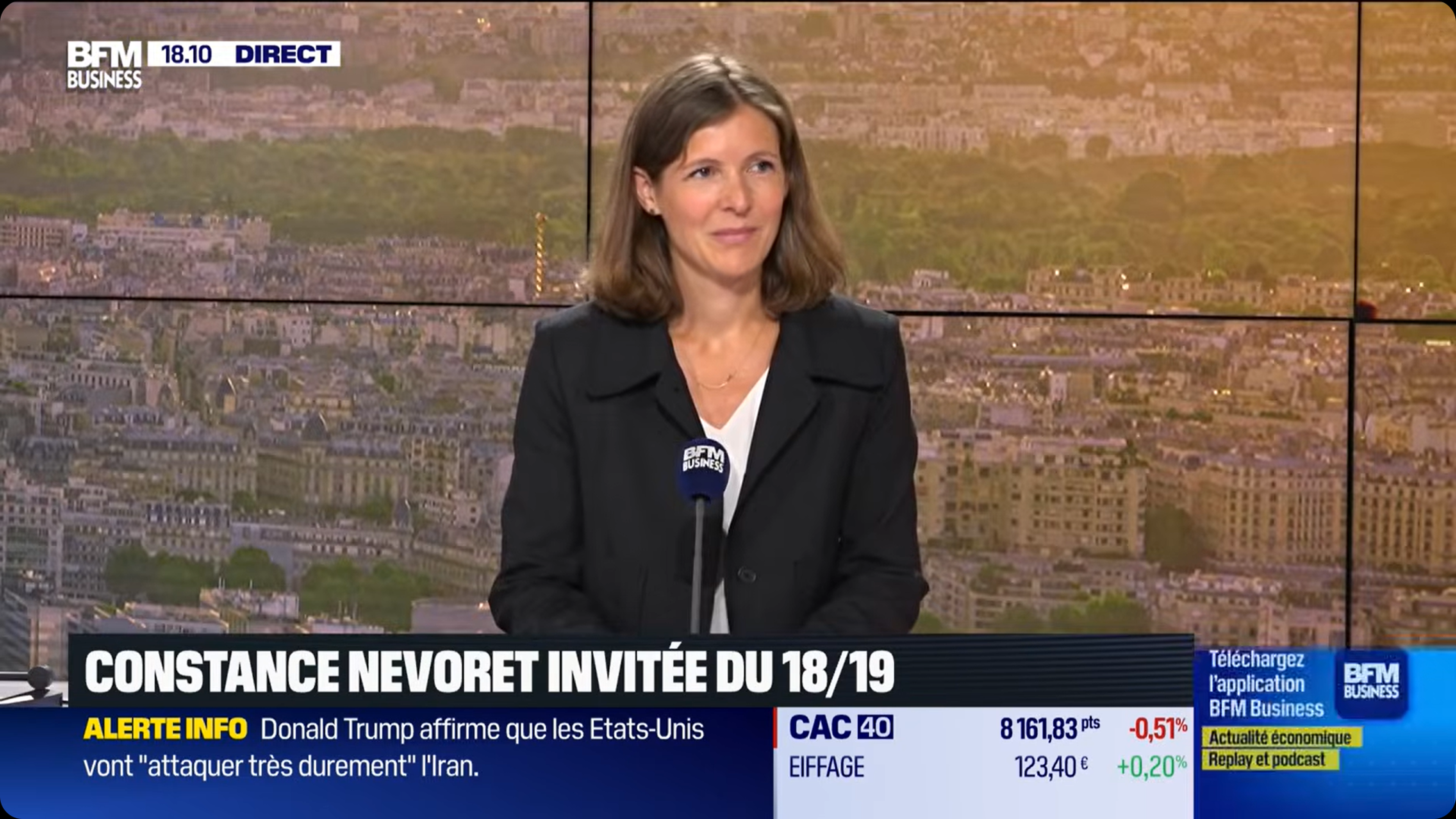
Constance Nevoret joined Mantu almost at the start of her career.
She first worked in the UK, then moved to Canada, where she helped develop Mantu's activities in Montreal and Toronto. In 2020, she became CEO of LittleBig Connection, part of Mantu. Over five years, the business grew from around €40M to €400M in revenue. Today, Constance is co-CEO of Mantu, an international consulting and technology company with 12,000 people across more than 60 countries.
AI is transforming work, not just technology
Much of the conversation around AI still is focusing on tools and models. Yet across the organizations Mantu supports, the bigger change is happening elsewhere: AI is transforming work itself.

"I think we're having the wrong conversation about AI. We spend a lot of time talking about tools and technological breakthroughs. But what we see at Mantu in the field is that AI is transforming work itself."
This is what Mantu observes across client projects, within its own teams and across the broader market. The impact of AI is no longer limited to technology departments. It is reshaping how people work, collaborate and contribute across the organization. Most importantly, the way value is created inside organizations is changing.
The challenge is no longer simply about adopting new tools. It is about helping people adapt to a new reality of work.
A divide is emerging inside organizations
The most significant divide created by AI is not between organizations, it is already running through teams.
"Within the same team, some employees are using AI to gain autonomy, develop new capabilities and create more value. Others are seeing parts of their work become increasingly standardized. The AI divide is already running through organizations."
As AI adoption accelerates, the gap between those who continuously develop new capabilities and those whose skills become less differentiated is likely to widen. The challenge for organizations is therefore not only technological, it is organizational and human.
The next challenge is learning at scale
Recent data illustrates the scale of the shift. Today, 93% of AI investment goes to technology, while only 7% are invested in the people expected to use it. At the same time, 50% of business leaders report workforce overcapacity linked to automation, while 94% face critical AI skills shortages elsewhere in their organizations. Some capabilities are becoming abundant while others are becoming increasingly difficult to find, often within the same organization, at the same time.
These trends point to a broader challenge: organizations must not only deploy AI, but they must also create conditions for people to learn, adapt and evolve alongside it.
"The challenge of the next decade will not be only technological, it will be human. And in three years, organizations that succeed in large-scale reskilling will have an execution advantage that others won't be able to match."
For Mantu, training people to work alongside AI is no longer only a performance issue. It is becoming a workforce issue, a competitiveness issue and, increasingly, a responsibility.
The organizations that create the most value from AI over the next decade will not necessarily be those with access to the most advanced technologies. They will be those that help the greatest number of people develop new skills, adapt to changing roles and actively participate in the transformation.